
The Revolution Will Have Alt Text

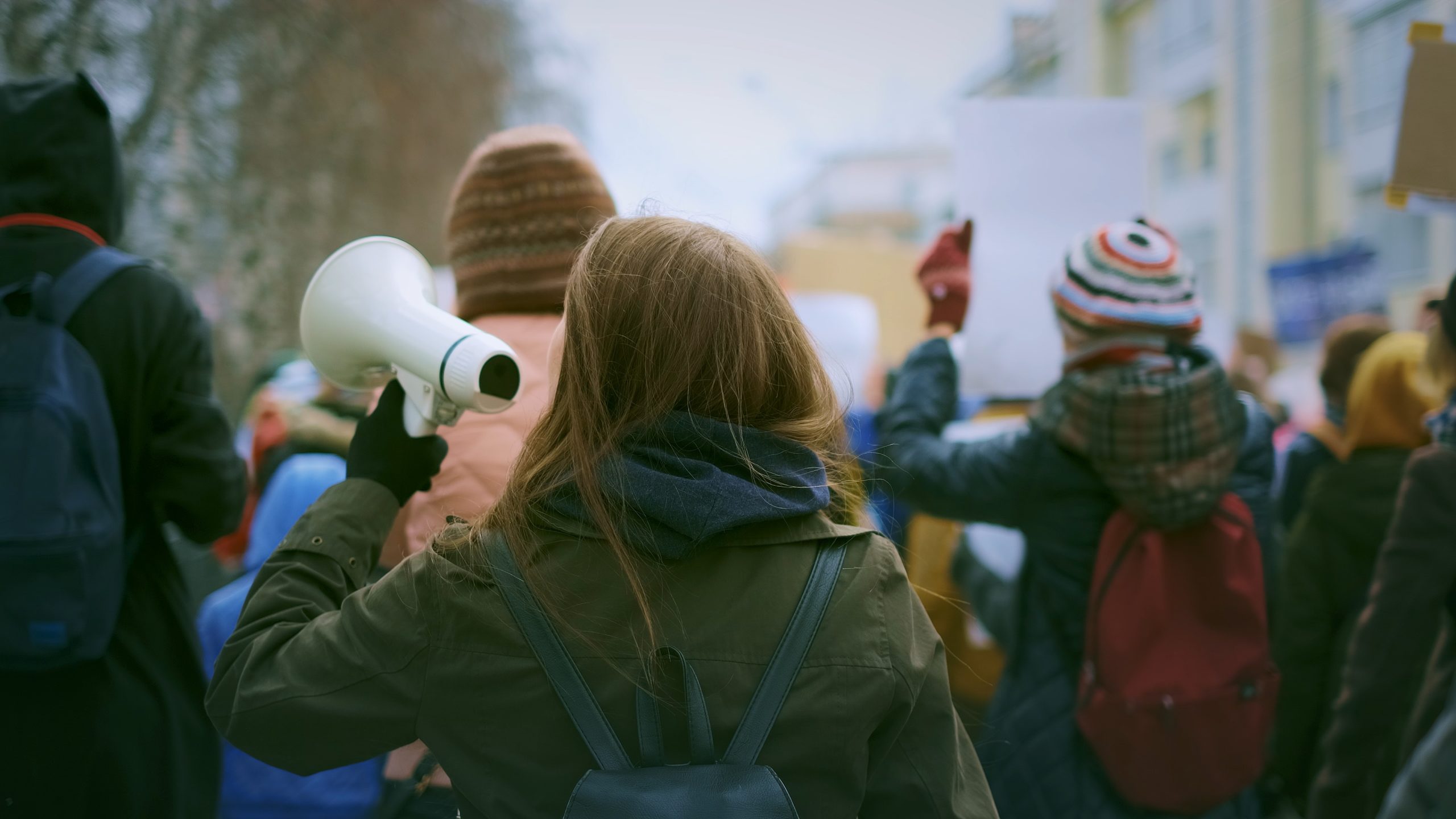
Outdoors, day. A crowd of protestors seen from behind. Some people are wearing winter hats and backpacks. A person with long brown hair in the center holds up a blow horn.

“If you can’t run a mile without stopping, you’re not ready for the apocalypse.”

When I read this quote on a friend’s Instagram story, it infected my mind for weeks. I had stress dreams about getting lost in alleyways, trapped for eternity in an endless maze. As a blind guide dog handler, I rarely travel without assistance. Bright, my dog, flunked out of the running guide unit during training; I’m not exactly marathon material either. If survival depends on sprinting, I probably won’t make it very far.

But the real issue is not whether I can run. It’s the version of survival that our hyper-individualistic culture demands: fast, isolated, physically strong, and self-reliant. I do not see myself as the main characters in the zombie apocalypse stories. I see myself in those quietly working together behind the scenes, the ones who survive because they have someone to call and someone to care for.

Disabled people already know how to survive in broken systems. We do it all the time. We adapt, we plan, we rely on one another. I bring eggs from my chickens to the neighbors. They give me a ride to the pharmacy when my transportation falls through. That’s not charity; it’s how we both get through.This kind of mutual care is what the disability justice movement calls interdependence, and it challenges the myth that any of us survive alone.

I prepare in other ways, too. I chaos garden. I buy flour in bulk. I label jars of preserved food with puff paint braille dots. But even the best-stocked pantry is not enough if I can’t access emergency alerts or mutual aid networks. I can’t volunteer if the sign-up sheet is a graphic with no alt text. I can’t join the ride list if it’s saved as a JPEG.

These are not small issues. In a crisis, they decide who gets help and who gets left behind. Inaccessible communication in emergencies shows how even protections promised by the ADA fall short when digital systems are not designed with us in mind. Even our own movements forget that access is the keystone to survival, not something to address only when approached by the squeaky wheel.

Sometimes disaster prep means emailing the local transit board because their annual reports aren’t screenreader compatible. Sometimes it means advocating for plain language in public health alerts. It means pushing for town halls to be held in buildings with accessible entrances. It means organizing to add image descriptions to the work of the photo-journalists documenting an ongoing genocide. These are acts of care. They keep the circle strong.

I’ll admit that my go-bag is lacking. But I do have a mental map of who can show up in an emergency, who needs support, and who might need a couch if they can’t make rent. I know who goes out of their way to make their digital content accessible. And I know who has space in their fridge if the power goes out. This is what safety looks like for me.

No, I cannot run a mile without stopping. But I know how to take care of people—and I know who will take care of me.


Izzy Bailey (she/they) is a social work graduate student at the University of Maine who works at the intersection of disability justice, public health, and outdoor equity, drawing on her lived experience as a blind guide dog handler. She serves on various boards and councils including Maine Organization for Blind Athletic and Leadership Education (MOBALE) and the Guiding Eyes Graduate Council. Izzy is passionate about building more accessible communities across Maine and beyond.

About Rooted In Rights

Rooted in Rights exists to amplify the perspectives of the disability community. Blog posts and storyteller videos that we publish and content we re-share on social media do not necessarily reflect the opinions or values of Rooted in Rights nor indicate an endorsement of a program or service by Rooted in Rights. We respect and aim to reflect the diversity of opinions and experiences of the disability community. Rooted in Rights seeks to highlight discussions, not direct them. Learn more about Rooted In Rights

Tips for Disabled Library Patrons

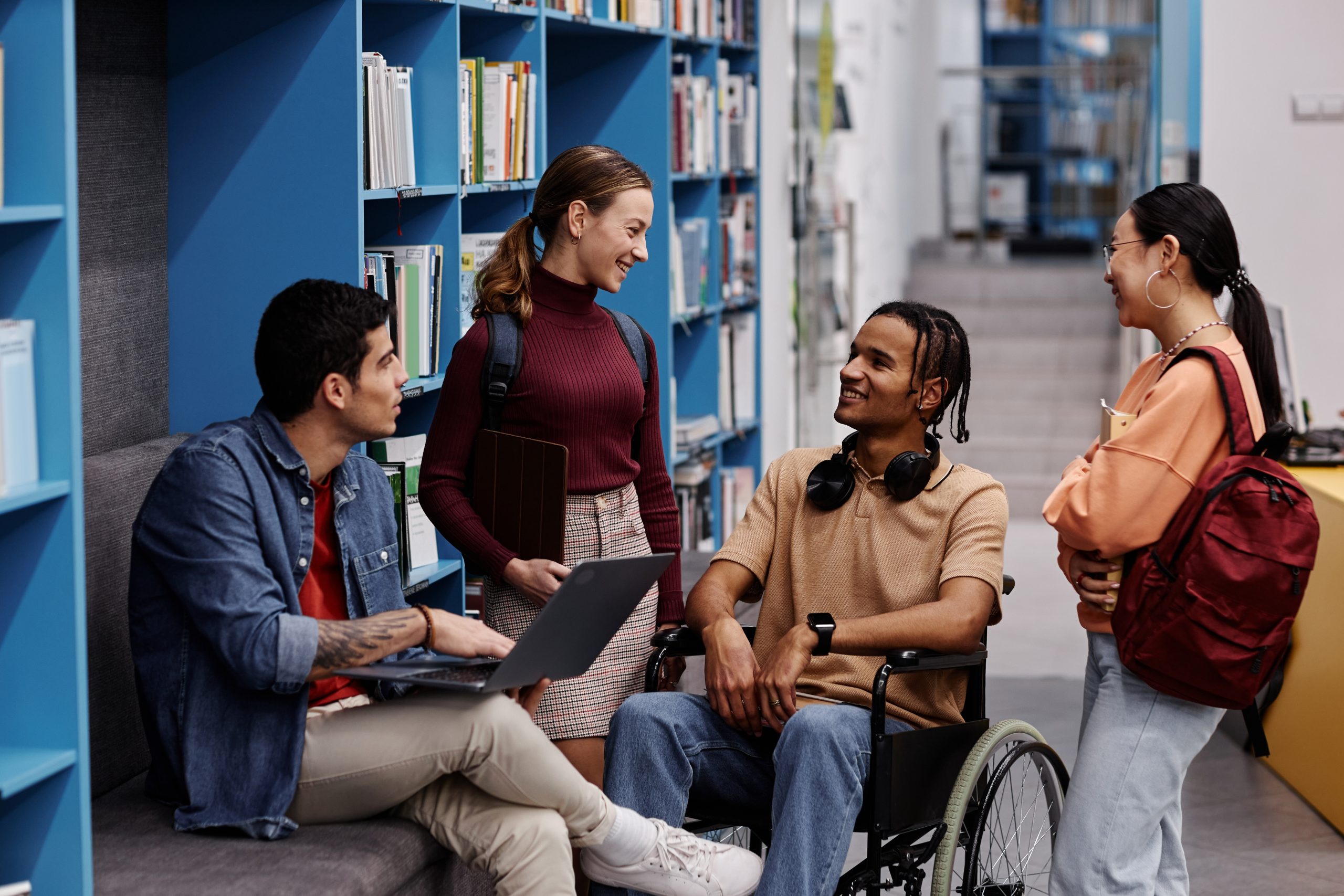
A group of young adult students with various skin colors, phenotypes, and clothing and hairstyles chats cheerfully in a college library, One of the students, a brown-skinned person with short braids, is a wheelchair user.

Public libraries aspire to be places where everyone—including disabled people—belong. They don’t always meet the mark, but disability advocates and disabled people within and outside of library workspaces continue to push for improvements to library spaces, programs, collections, and more. A great example of these efforts is Serving Patrons with Disabilities, a book written and edited by disabled people, published by the American Library Association.

As a disabled library worker myself, I want to provide some tips to fellow disabled library visitors on how to make the most of your local library:

  1. Acquiring Items: Some libraries deliver or mail library items to library visitors unable to leave home due to disability. Eligibility and systems vary, so check with your local library to see what services are available to you! If you can leave your home but would rather not enter the library, you can also ask if your library would be willing to provide curbside pickup services.
  1. Programs: Some libraries already provide programming focused on disabilities or serving disabled library visitors, but if you’re not seeing the kinds of programs you’d like, ask about them! Many libraries are happy to host in-person, hybrid, and virtual meet-ups for support and advocacy groups or to adapt existing programming to be more disability-friendly.
  1. Space: Libraries are not the near-silent spaces they used to be anymore – many have areas where higher volumes are allowed or encouraged. If you have sensory sensitivities, it can’t hurt to bring your favorite ear protection. In addition, public libraries are considered public spaces under the Americans with Disabilities Act (ADA), so if you experience difficulty accessing the physical space of your library, alerting the library of your need can help them to not only better serve you, but to better serve others with similar needs in your community!
  1. Technology: Libraries now offer technology access, predominantly in-library desktop computers. Typically, the software available on these computers is standardized, but libraries are encouraged by our national association to provide screen reading software. Public libraries are also encouraged to offer live captioning, sign language interpretation, adaptive technology, and more. Feel free to suggest your library add any technology which would make your library more accessible to you! If you have a print disability, I encourage you to check out the Washington Talking Book and Braille Library as well, as they have a wealth of resources for print disabled library visitors.
  1. Materials: Many libraries now include a “library of things,” or loanable non-book items, in their collections. Those items tend to include musical instruments, disc drives, or wi-fi hotspots. Although your local library may not already have accessible technology, mobility aids, or similar items available in their library of things yet, you can always encourage them to build their collection in a way which supports disabled community members.
  1. Needing Help: If there’s something you need that you’re not sure your library provides—such as assistance with reaching materials on high or low shelves or with navigating inaccessible websites—feel free to ask! Most libraries have a centrally located desk called a circulation desk, where you check out materials. The staff there are trained to either be able to answer your questions or direct you to a person who knows how to. Library workers aren’t always trained on best practices for helping disabled library visitors and may need some guidance, but staff should be able to help you troubleshoot a solution.

Libraries, like the rest of the world, are in a constant state of change. With the recent dismantling of the Institute for Museum and Library Services, many libraries have lost money which fund services for disabled library visitors, such as talking book and braille libraries and delivery services. If you want your library to continue to support these programs, it’s critical that you make your voice heard, not only to the library, but to your local government and other sources which fund your local library. The items listed here are just a start—there’s a wide variety of ways libraries can (and do!) serve their disabled visitors. So just remember: your ideas for improvements and changes are welcome!


Lex Van Horn (he/they) is a physically disabled and neurodivergent early-career library worker living in rural Washington state. When he’s not working, they play video games, read, write, and play flute.

About Rooted In Rights

Rooted in Rights exists to amplify the perspectives of the disability community. Blog posts and storyteller videos that we publish and content we re-share on social media do not necessarily reflect the opinions or values of Rooted in Rights nor indicate an endorsement of a program or service by Rooted in Rights. We respect and aim to reflect the diversity of opinions and experiences of the disability community. Rooted in Rights seeks to highlight discussions, not direct them. Learn more about Rooted In Rights

How I Edit and Caption My Videos as a Deaf Person

Indoors. Fair-skinned hands of a person are visible at the keyboard of a laptop in a dimly lit room. The keyboard lights up a light blue. The person is in the middle of editing a video with professional editing software. Their right hand holds a black computer mouse while their left hand types on the laptop.

Have you ever wondered how a (mostly) oral deaf person edits and captions their own speaking videos? After all, it sounds strange for one to do so if they can’t hear and understand themselves very well, right?

I’ve been on YouTube for over 10 years now. I started as a makeup influencer before switching to a more lifestyle genre. I primarily spoke about being a mainstreamed deaf person—and trying to find my identity and a deaf community (as well as accessibility). This, of course, included talking about captions and advocating for YouTubers to properly caption their videos.

Because I did not grow up signing—I spoke English—my videos were in spoken English. Filming was easy, but editing was hard. Captioning my videos was even harder than editing them. Sometimes I had a script but, most of the time, I didn’t. Even if I listened to a line 10 times, I could still get words wrong. When community contribution was a thing on YouTube, I often had a volunteer caption my videos for me. For a few years, I had a sponsor who would caption my videos in exchange for 1-2 videos a month on their Facebook page. Unfortunately, community contribution is no longer a thing

Currently, I use Adobe Premiere Pro’s automatic captioning feature to automatically caption my videos. I grab their file and upload it to YouTube, editing any mistakes that the software made. This is a process I recommend for everyone, using the auto captions as a base. It saves so much time.

On Premiere, you have the option to generate a transcript and turn that into captions. You can edit the captions in the program, especially if you’re creating open captions, or you can do what I do and save the SRT file, upload it to YouTube, and edit on there.

YouTube also generates automatic captions. Those can be edited to become more accessible.

This process is so much easier and faster because most of the work is already done for the creator. All that’s needed is to make sure all the words are correct and fix grammar and punctuation for accessibility purposes.

Recently, there have been some innovations for Deaf creators who primarily sign. In this case, as I’m American, I will be talking about American Sign Language (ASL). Sign-Speak is a Deaf-owned business that just launched their ASL to captions software. You can record yourself signing for up to a minute and then edit the captions as needed. 

Finally being able to have access to hearing aids changed the game for me. Ten years ago, my hearing was better than it is now. Not great, but I could do more without assistive devices. I actually did not have hearing aids for the majority of my life, only having recently gotten them for the first time in August 2021.

When I got my hearing aids, it changed everything for me. They had Bluetooth streaming technology. The first time I tried it, I heard and understood so much more. Editing became more of a breeze, as did captioning. It wasn’t perfect, no, as hearing aids don’t make you hear like a hearing person, but it was so much clearer than with headphones. (For the record, hearing aids do not work for all deaf people.)

I don’t know how I’d be doing if I didn’t have them. Content creation still comes with moments of frustration, but there is no way I’d be able to or want to go back to the routine I had before.

There are still moments when I have no idea what I’m saying. I usually replace a word with (indistinct) and hope someone catches it and writes the correct word in the comments, then I go back in and fix it.

When I ask for people to make their videos accessible with captions, I’m often met with being told that it’s too hard or too time consuming. As a creator myself, I understand that. As a deaf creator, I understand that even more because providing accessibility is two times harder and time consuming than it would be for a hearing person. My hope is that by sharing my journey with readers, everyone knows how important it is to make content accessible. If a Deaf creator is doing so, why can’t hearing creators?


Rikki Poynter (she/her) is a disabled (deaf, chronic pain and fatigue) content creator, writer, public speaker, and accessibility consultant. For a decade now, she has been talking about her journey growing up deaf and mainstreamed while dipping her toes into finding a Deaf identity. She is based in Omaha, Nebraska.

About Rooted In Rights

Rooted in Rights exists to amplify the perspectives of the disability community. Blog posts and storyteller videos that we publish and content we re-share on social media do not necessarily reflect the opinions or values of Rooted in Rights nor indicate an endorsement of a program or service by Rooted in Rights. We respect and aim to reflect the diversity of opinions and experiences of the disability community. Rooted in Rights seeks to highlight discussions, not direct them. Learn more about Rooted In Rights

A Roadmap for ADHDers Who Just Want to Eat, But OMG It’s so Hard

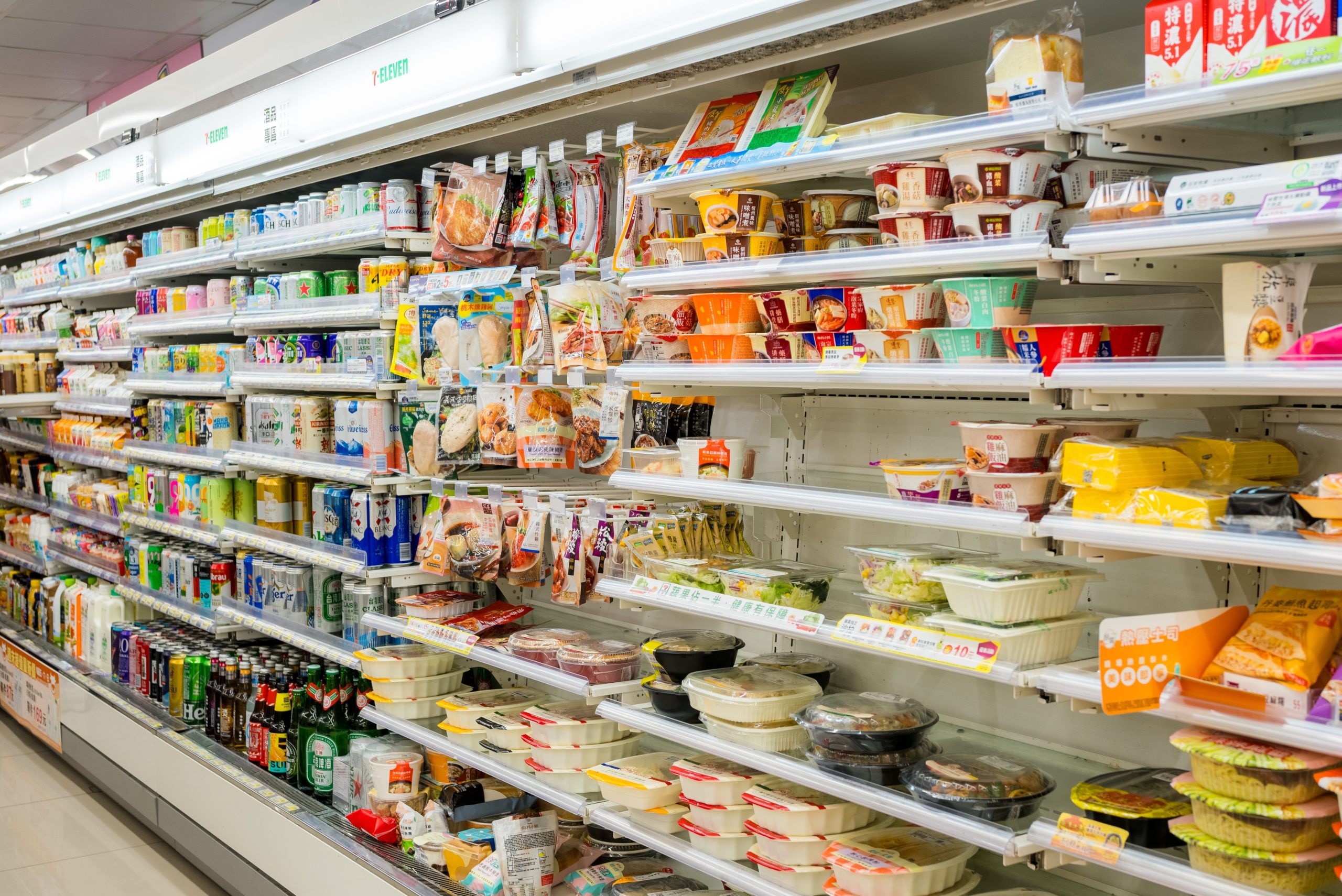
An aisle in a the refrigerated section of a convenience store.

My ADHD presents itself in a limited ability to plan (and eat) a meal. Between choosing a dish, sourcing ingredients, going to a grocery store, prepping, cooking…the thought alone overwhelms me and I barely make it past step one. I’m not alone: studies show that most people with ADHD have unhealthy relationships with food. Furthermore, myths around food intake—like reducing sugary foods or eliminating certain chemicals to reduce ADHD symptoms—send misguided messages about how to manage ADHD. 

And yet, the symptoms persist. The executive dysfunction disrupted my life to a point that I was either going hungry or running up a very expensive takeout bill. Something had to change, so I saw a nutritionist who specializes in ADHD. Here’s what I learned.

Reframing ADHD Symptoms

Before I could tackle the physical labor of the shopping-to-cooking-to-eating pipeline, I had to mentally reframe my ADHDness, as I’d been harboring internalized ableism for my inability to cook from scratch. 

I’d tell myself: Itemizing ingredients isn’t hard. Shopping for groceries isn’t hard. Chopping veggies, cooking, washing dishes isn’t hard. So just do it.

These statements, that I’d convinced myself would motivate me into action, were actually really harsh self-bullying. By holding myself to this unfair standard, I created a narrative that I was the problem. Once I reframed these tasks for what they were for me—impossible, herculean, really hard—I could open myself to ways I could lessen the load.

The Freezer Aisle Is Your Friend

It turns out I don’t have to chop the veggies, grate the ginger, or cook the meal. I can buy them already chopped or frozen from the freezer aisle. And guess what? It’s still food, still nourishing. Eating a meal is more important than not eating one at all. The freezer aisle is a treasure trove of quality food without breaking your mental load.

But What If I Can’t Make It to The Freezer Aisle?

On low bandwidth days, I’m too tired to think about cooking and just want to eat.  This next resource does require up-front labor, but the novelty helps create motivation: make a personal menu of your go-to foods. Mine is fashioned after a kids’ restaurant menu, with pictures of the foods I like. However, listing them on the Notes app to refer to works just as well.

I considered these questions when making my personal menu: what are my favorite meals? The foods I eat without hesitation? My “treat-yourselfs?” These can be microwaveable or even takeout. My menu includes yogurt, microwaveable ramen, Korean takeout, frozen fish sticks, brownies, and Dr. Pepper.

Stocking Your Pantry

After identifying my food favorites, there’s one herculean task left (luckily, just one): stock my pantry. I won’t always want to eat those foods but, on a hunger-driven time crunch, I thank myself for the foresight.

These are admittedly still labor intensive tasks, but I’m no longer wading through a wasteland. I have a roadmap that enables me to cook more often—not because it’s “better,” but because I have a craving and now the bandwidth to satisfy it. Thanks to this roadmap, I now eat full meals with, well, still with lots of effort but with less mental load and a less bleak outlook on what’s for lunch.

In a society that often marginalizes us, this jar is a quiet revolution. It celebrates our ingenuity and calls us to keep going. What will you add to yours?


Based in Los Angeles, Ashley Soto Paniagua (she/her) is a TV writer and founder of Me Dio La Gana Jewelry. You can find her on Instagram.

About Rooted In Rights

Rooted in Rights exists to amplify the perspectives of the disability community. Blog posts and storyteller videos that we publish and content we re-share on social media do not necessarily reflect the opinions or values of Rooted in Rights nor indicate an endorsement of a program or service by Rooted in Rights. We respect and aim to reflect the diversity of opinions and experiences of the disability community. Rooted in Rights seeks to highlight discussions, not direct them. Learn more about Rooted In Rights

Finding COVID-conscious Community

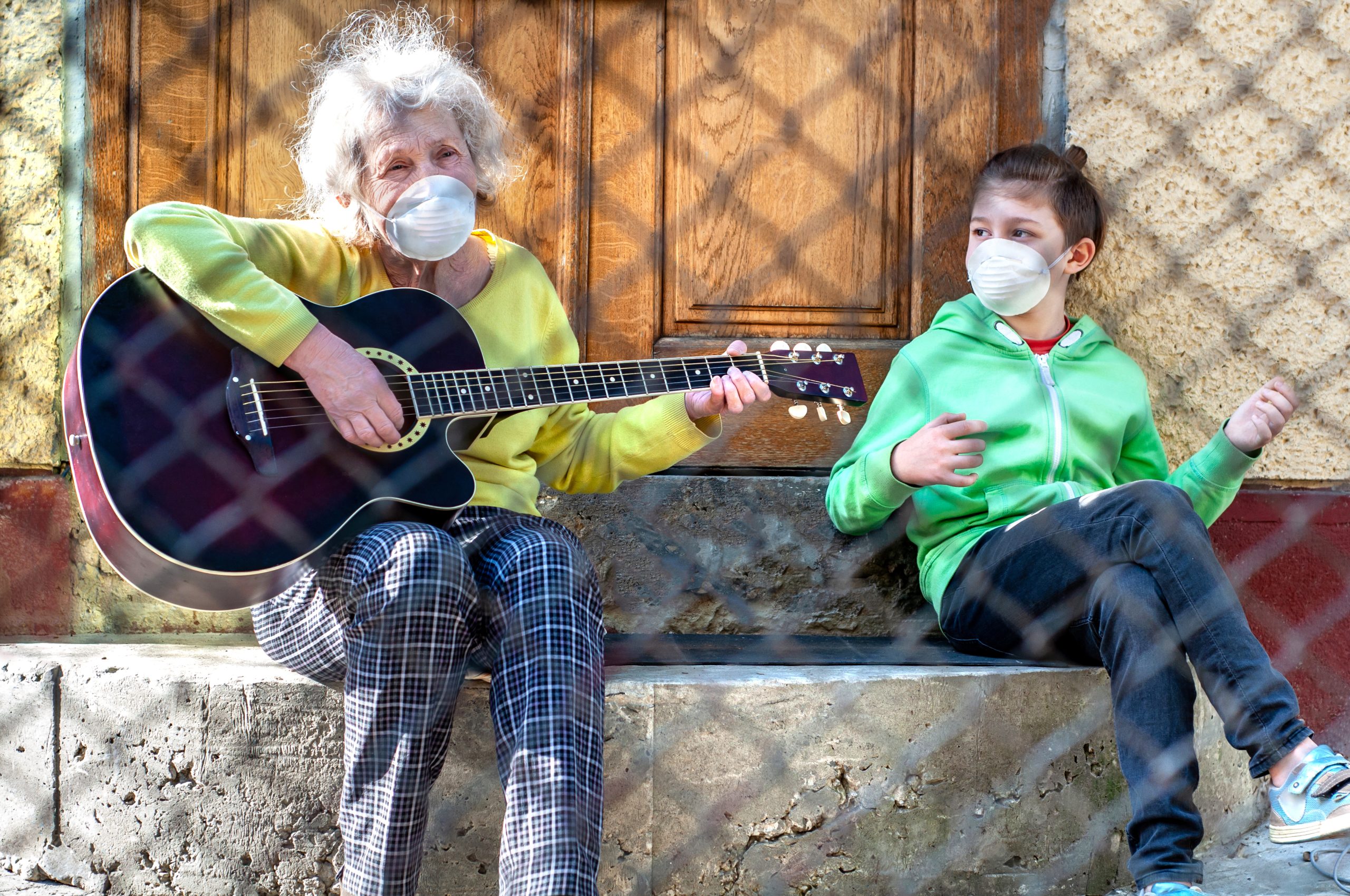
Outdoors, day. Two fair-skinned people, a white-haired elder and a school-aged child, are dressed casually as they sit on some front steps. They're both wearing white respirator masks. The elder is holding a black guitar as the younger person looks at them.

DISCLAIMER: This post is neither sponsored nor an ad.

There are many reasons why some folks never went “back to normal” in the years following 2020. Some of us are immunocompromised, have Long COVID from a previous infection, or take care of those who are at high risk. Others may simply know the risks associated with repeat infections and don’t feel like rolling the dice. Whatever your reason for practicing COVID (and other airborne illness) mitigation habits, you’ve likely struggled with finding like-minded people to connect with.

Traditional dating/friend-making apps can be a great place to start if you want to cast a wide net or live in a rural area. I’ve had success finding COVID-conscious friends using apps like Bumble BFF, as well as some other corners of the internet like COVID-conscious subreddits and Facebook groups. Of course, these are often targeted more at information sharing rather than making meaningful connections. 

Combing through hundreds of Bumble profiles only to find one person who might be a match can be disheartening. I’ve thought to myself many times before “Why isn’t there a way to filter for only COVID-conscious people?”

There’s an app for that!

The app, called Refresh Connections (referred to herein as Refresh), is available for free on Android and iOS. There is a paid premium feature, but you truly do not need it to enjoy all of its primary functions. Set up much like any other human connection app, Refresh matches you with other folks with similar interests and goals. What makes this app unique and invaluable to people who are seeking COVID-conscious community, however, is its focus on airborne infectious disease safety.

When you sign up, Refresh asks you to create a profile consisting of a short bio, a few photos, and the types of relationships that you’re interested in establishing (e.g. friendships, serious or casual romantic relationships, business/professional connections, etc.). You are then asked a few questions around the types of precautions you take and your level of potential exposure, such as your work situation, if you eat at restaurants, and whether or not you have roommates.

And then you’re in! You’ll see your potential matches and can chat using the in-app messaging platform. You can also filter by location, age, prevention behaviors, sexual orientation and gender identity (they offer a pretty robust list of self-identity options), and relationship types. The filtering system can be fine-tuned here, if desired. You can hand-pick which identities you would like to see in your matches, as well as which identities you would like your profile to be shown to. This feature can be handy for safety reasons, but seeing as the app is currently largely inhabited by queer and disabled people like myself, I haven’t personally found a need to use it yet.

This app shows so much promise, and I sincerely hope that it continues to grow, but there is a major roadblock for me: the smaller user base. In my town, there are no active users. I’ve come to accept that I’ll be using Refresh mostly for establishing great virtual connections with like-minded folks. If you live in a larger city, however,  you will likely have better luck finding local connections. I like to think of it as valuing match quality over quantity. Having fewer options to pick from, but a higher likelihood of establishing a lasting relationship (even if that relationship is long or medium distance) is invaluable, in my opinion.

I still think spreading the word about Refresh is a worthy endeavor. The more people who know about it, the more useful it can be for those like myself, who have been shuffled to the dark corners of society due to disability and accessibility issues, to find community among people who just get it.

Some other resources that I’ve found helpful in getting back to my own version of normal is utilizing masking and testing before, during, and/or after in-person meetups. There is absolutely nothing wrong with asking a friend if they are okay with wearing a mask while you hang out and/or both of you taking a test beforehand! If cost is a concern, there is a massive directory of mask blocs, which distribute free masks and COVID tests to those in need.

With the right resources, and a little bit of pre-planning, there are truly so many ways for us to stay connected and present while also protecting each other!


Harmony King (she/they) is a disability advocate, (sometimes) content creator, and a lifelong learner. Born disabled, she loves to use humor and art to call in able-bodied folks and get them thinking about their role in perpetuating ableism. When they aren’t in a pain flare, you can find them reading, writing, playing video games, crafting, or starting a shiny new hobby. You can find her on Threads, Bluesky, and Instagram.

About Rooted In Rights

Rooted in Rights exists to amplify the perspectives of the disability community. Blog posts and storyteller videos that we publish and content we re-share on social media do not necessarily reflect the opinions or values of Rooted in Rights nor indicate an endorsement of a program or service by Rooted in Rights. We respect and aim to reflect the diversity of opinions and experiences of the disability community. Rooted in Rights seeks to highlight discussions, not direct them. Learn more about Rooted In Rights

The Next Inevitable Disaster: Emergency and Disaster Preparedness for Disabled Folks

Indoors, day. In a living room, a coffee table sits with a backpack, plastic water bottles, rolls of tissue, a flashlight, crackers, and other assorted items on top of it.

Consider me cursed or consider me lucky but, in just under three decades, I’m now up to surviving 13 out of the 18 natural hazards listed on the National Risk Index. After the Los Angeles wildfires of January 2025, I’m dreading the others.

I grew up with heat waves and hurricanes in south Texas but since then I’ve moved from city to city following my schooling and writing dreams. Each city has had its own, new weather pattern that I’ve had to prepare for. Occasionally, I was cohabiting with a partner or living with a roommate. But oftentimes, due to estrangement from my family and impending breakups, I was living alone—as I am now.

The first sustained subzero temperatures I experienced co-occurred with contracting a neuroimmune disorder while living in my first solo apartment. Afterward, I knew I’d be unlikely to have immediate support when anything disastrous occurs.

In fact, the recent fires in LA sobered many of us up when it came to accepting the new, unpredictable chapter we’re living in. It reminded me that, well in advance, I must remain prepared as a single, disabled person who lives alone. Here’s how you can, too.

#1: Have your go-bag ready. If you had to leave right now, what would be most crucial for you to have on hand? In my bag, I’ve kept:

  • A bit of food for me and my pup, though we could always share the SPAM
  • Documents and medication that are hard to replace, including a copy of my lease
  • A cozy outfit or two
  • A spare pair of glasses
  • Some candles, batteries, and duct tape
  • A pack of tarot cards (because you never know when you’ll need ‘em)

As time has gone on without any trouble, I’ve cycled out the clothes and food inside but left a little at all times. I want to be ready on a whim. Other material items do hold sentimental value but your life is most important. You can always replace lost things via donations, thrifting, or your local BuyNothing or Freecycle networks.

#2: Be your own judge and jury. Is it time to leave? Unfortunately, you cannot wait for federal or local governments to speak up. Los Angeles accidentally sent out multiple mistaken evacuation texts to areas that didn’t need to leave. Some that did need to go never got them. You’ll have to be diligent in keeping an eye on the news and weather near you using apps like Watch Duty or Storm Tracker.

It also helps to follow a few hobbyists. After Hurricane Harvey, many Houstonians turned to Space City Weather. In January, Altadena was lucky to have Edgar McGregor. Small-time meteorologists and seismologists publicly track these events out of pure interest, rarely exaggerating for clickbait. Is there someone like that in your area?

#3: Community is a requirement. Yes, we’re lone wolves but, clearly, no one can do it completely alone. Seek out the helpers. Local mutual aid groups were the fastest responders during every disaster I’ve endured (especially Mutual Aid Los Angeles Network). Find yours! Ask if they have a group chat you can join, a contingency plan, or a disaster hotline. They may come in clutch should you need emergency transportation, sidewalk shoveling, or legal support.

Now, fly, my pretties! Ready yourself for the next inevitable natural disaster to grace us with its presence. I’m personally bracing myself for a major earthquake, given that even the tiny ones leave me quaking long after they’ve ended. But I do have slight peace of mind knowing how to look after myself and where to turn should I have to endure them. 

We can’t control nature, we just stay ready so we don’t have to get ready.


Danielle Brown (she/they) is a Black queer writer living in Los Angeles, CA. You can find more about them at their website.

Rooted in Rights exists to amplify the perspectives of the disability community. Blog posts and storyteller videos that we publish and content we re-share on social media do not necessarily reflect the opinions or values of Rooted in Rights nor indicate an endorsement of a program or service by Rooted in Rights. We respect and aim to reflect the diversity of opinions and experiences of the disability community. Rooted in Rights seeks to highlight discussions, not direct them. Learn more about Rooted In Rights

The Cost of Comfort: Paying the Price for Dietary Accommodations

An illustration of a basket of various produce surrounded by a red glass bottle, a slice of a block of cheese, French bread, a wallet, and either a debit or credit card. Above that is a red line from a traditional chart or graph trending upwards.

EDITOR’S NOTE: This blog discusses the added cost of dietary restrictions in day-to-day life. RiR also wants to acknowledge that dietary restrictions and allergens can be a matter of life or death. Having safe access to food is a disability issue and not taking accommodations seriously leads to tragedies like the recent death of Disney influencer Dominque Brown.

I stumbled upon this cozy little café in Puerto Vallarta that had the perfect vibe: a swinging chair, cute plants hanging from the walls, and a warm, inviting atmosphere. Best of all: everything on the menu was entirely gluten-free. I treated myself to a bacon-wrapped shrimp burger, refreshing hibiscus lemonade, and a rich chocolate mousse that felt like a slice of heaven. As someone with Celiac disease, finding a spot like this felt like winning the jackpot—it was one of those rare places where I could indulge without worrying about gluten sneaking into my meal.

Eating out as a Celiac is often a nerve-wracking experience. It’s a dance of conversations and questions that can be exhausting, especially when you’re just trying to enjoy a meal. Even the tiniest trace of gluten can set off an entire health crisis for me. Over time, it can lead to some serious complications. So, when I find a restaurant that gets it, it’s like finding a hidden gem.

Unfortunately, most of the safe options tend to be on the pricey side. It seems like the fancier the place, the better the staff understands food allergies. This gives me peace of mind, as I’d rather shell out a few extra bucks than risk my health. But let’s be real: those extra costs can add up, whether I’m traveling or just grabbing a bite out locally.

This issue isn’t exclusive to people with Celiac disease; it affects anyone with dietary restrictions or health conditions. For example: at many coffee shops, if you choose almond milk instead of regular milk, there’s often a $1.00 surcharge. While a dollar might not seem like much, it’s about the principle. It can also add up.

Almond milk costs the same to produce as regular milk, so why should people with dietary needs be penalized for having a health condition? If it does cost more to make alternative products, some countries or government systems would cover the difference for individuals with chronic health needs, similar to how insurance pays for a sick person’s medication.

But those with conditions like Celiac, irritable bowel syndrome (IBS), or lactose intolerance are left to cover the extra costs on our own. This can be a significant burden for those already struggling financially. Rather than trying to profit from people’s disability, our system should offer support and equity. It should be standard to provide reasonable accommodations as part of ethical business practice.

For one, governments or organizations could provide subsidies for products that cater to specific dietary needs, such as almond milk. Retailers and manufacturers could adopt inclusive pricing strategies that ensure no additional charges for people requiring alternative products due to health conditions.

Health insurance plans could also cover the costs of specialized foods, medications, and treatments for chronic health conditions, similar to how they cover other medical expenses. Lastly, companies could provide transparency about the cost of producing alternative products to address misconceptions about pricing.

Combining these strategies could lead to a more equitable—and safer—environment for those of us for whom food can be a minefield. I dream of a world where that cozy little café is commonplace. I dream of a Puerto Vallarta for all.


Eleni Stephanides (she/her) is a Spanish interpreter and freelance writer living in Oakland, CA. She has been published in LGBTQ Nation, Them, Elephant Journal, Tiny Buddha, Introvert Dear, Peaceful Dumpling, and The Mindful Word, among others. In her spare time, she enjoys wandering through nature, reading fiction and mental health content, speaking Spanish, and petting cats. You can follow her on Instagram and Medium.

Rooted in Rights exists to amplify the perspectives of the disability community. Blog posts and storyteller videos that we publish and content we re-share on social media do not necessarily reflect the opinions or values of Rooted in Rights nor indicate an endorsement of a program or service by Rooted in Rights. We respect and aim to reflect the diversity of opinions and experiences of the disability community. Rooted in Rights seeks to highlight discussions, not direct them. Learn more about Rooted In Rights

Fired During Accommodations Application: Reflections from A Black Autistic Worker

A Black person with short dark hair and glasses in a light-colored, short-sleeved shirt seated indoors at a laptop with a look of dismay on their face, hands clasped together covering their mouth.

One of my greatest dreams is financial security. Not just so I can live my life well, but so I can dream about living. Period. Also, financial security almost guarantees health insurance; my medication costs $300-1,000 per month without insurance.

When I couldn’t be claimed on my parents’ plan anymore (which is in itself a privilege), all I could think whenever I clocked in at any job was, “I get to stay in therapy. I get to take my meds. I get to keep breathing.”

Four years ago, I quit my customer service job because masks weren’t enforced. Thankfully, I found an apprenticeship that would start within two months and allow me to get my Associate’s degree and work virtually. 

I spoke at a global panel on invisible disabilities about four months into the second year of my apprenticeship. Colleagues reached out to me afterwards asking for resources and looking for support. I felt like I’d finally figured out a place where I could fit in at this company. 

Three months before my scheduled graduation from the program to full-time employee, I came across a work email that mentioned an institution known for child abuse. I had a PTSD flashback and requested the rest of the day off. I’d never done this before—tell someone the truth in a way that could help me. But this time I asked for help. In hindsight, I feel like I made a terrible mistake. 

Less than a week later, I was put on probation. Then I got COVID. I struggled with tasks that I’d already needed help with in the past; COVID brain fog and exhaustion made it worse. I explained to my bosses that I needed more time, more help. They encouraged me to take care and get better. My career counselor, God bless her, helped me update my accommodations request (closed captioning, extra time to respond) and apply for FMLA (Family and Medical Leave Act).

In 2023, across all levels of education and age groups, people with disabilities were much less likely to be employed than their counterparts without disabilities. As an organization that played up its commitment to diversity and inclusion, I’d hoped that there’d be more understanding as I attempted to find my place at work.

But, as shown in many companies, “diversity and inclusion” is more of a box to check off than a commitment to fulfill between employer and employee. This is extremely dangerous as Black disabled people are among the communities recorded to have high unemployment rates. Coupling that with anti-Blackness and misogynoir can make living day-to-day extremely difficult, if not near impossible.

Less than a week after I had gotten off the phone regarding my FMLA application, I was fired. When they pulled me into the Teams meeting to fire me, they didn’t even alert my counselor so that she could support me. It wasn’t the worst they could’ve done. At least they remembered to turn the captions on. 

Refusing to adhere to a person’s accommodations eliminates a person’s autonomy, making it difficult—if not impossible—to show up in a space. I couldn’t show up for work because I was spending energy meant for accomplishing tasks to advocate for my right to exist.

I’ve advocated for myself and others in work situations before and I’m tired. I’m tired of being seen as less than (not just due to disability, but race, gender, and sexuality–which are inextricably linked to and inform my disability). I’m tired of doing the work to be seen whereas others are treated as human without a second thought. I’m tired of my work being punished and I’m tired of being punished when I’m too burnt out to do the work necessary to be seen.

I’m something beyond exhausted and have been for years. And still…it’s not enough. I write, advocate, and show up and the world still tells me and my communities that we aren’t enough. What else can I possibly do?


A. Tony Jerome (they/them) is a Black, autistic multi-disciplinary artist. An Aardman Academy Stop Motion I graduate and 2024 Game Devs of Color speaker, you can find their work in The BreakBeat Poets: Volume 2, baffling magazine, and Freezeray Poetry, among others. They’re here to do good and do gay. You can find them at atjscreams on Bluesky and on their website.

Rooted in Rights exists to amplify the perspectives of the disability community. Blog posts and storyteller videos that we publish and content we re-share on social media do not necessarily reflect the opinions or values of Rooted in Rights nor indicate an endorsement of a program or service by Rooted in Rights. We respect and aim to reflect the diversity of opinions and experiences of the disability community. Rooted in Rights seeks to highlight discussions, not direct them. Learn more about Rooted In Rights

Leveling the Playing Field for Autistic Parents and Parents with Disabilities

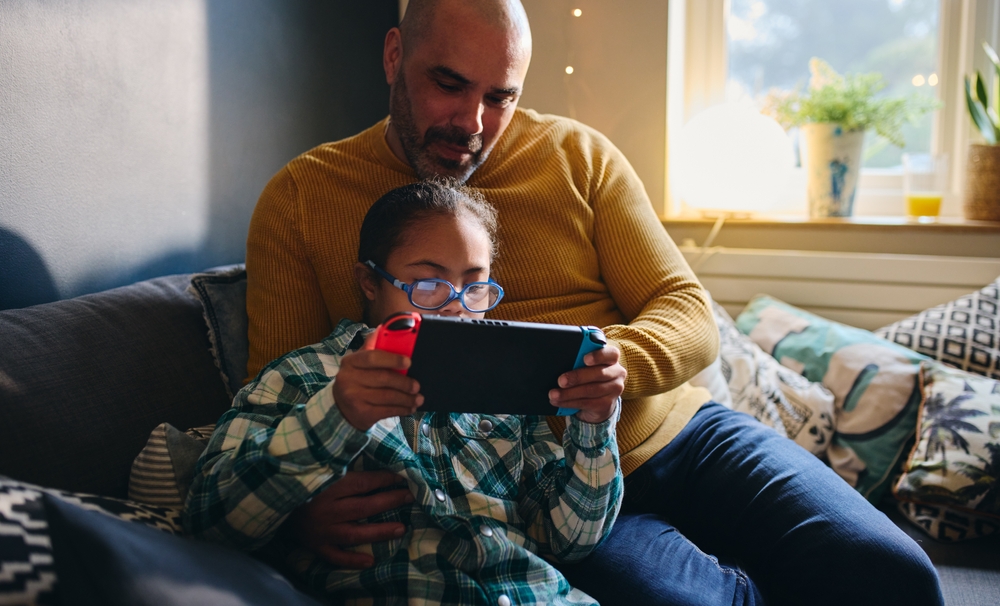
Indoors, day. A father, a light-skinned Black man, and his child, light brown-skinned, sit on a couch together as the child, wearing glasses, plays on an electronic device. The father watches.

It’s 5:45 in the morning and her feet patter into the room. She gets into the bed, rests her head next to mine on the pillow. “Ruff”. “Meow”. “It’s time to wake up, daddy!” I turn and say “Ruff! Good morning, Kenzy. Did you sleep well?” It’s officially time to start the day.

I’m an autistic, biracial Black, transgender person with multiple disabilities. I am also a parent, like any parent. But because of externalized and internalized stigma, I felt that being an autistic parent made me “less than” for the first year and a half of my daughter’s life. While, like most parents, I’m still learning and growing, I now know that being an autistic parent with multiple disabilities does not make me “less than.” However, it does bring a mix of its own challenges, extras, and superhero powers to the game.

In the beginning, I read all the first-time parenting books and figured out some strategies. However, I developed very few practical tips for how to be a multiply disabled autistic parent. Additionally, having an infant and toddler during the COVID -19 pandemic didn’t really provide time to learn the invisible, unpredictable rules of the game. So I took the same approach to the parenting game that I did the college and work games.

This gave me greater self-awareness in connection to being an autistic parent with multiple disabilities. This self-awareness leveled the parenting playing field by teaching me:

● Every parent on the field is a parent to their child. I need to take time to know my child as an individual.

● If I’m focused on comparing myself to other parents on the field, I trip and fall.

● When I meet my own basic self-care needs, I have the energy and ability to better meet my child’s needs in a regulated way.

● I discovered that flexible routines made a big difference in engaging in the activities of the day by helping my child and I with our emotional regulation and easing transitions.

● I will be out of my sensory safe zone and comfort zone a lot. What do I need in my first aid self-care kit?

Community building: I’m always looking to grow my autistic parent community, as well as my other parent-identity communities (LGBTQIA+, disabled, adoptive, etc.). I see a therapist who fits my specific needs. Finding support in books, music, classes, and programs has helped me know I’m not alone on this parenting journey.

Strategizing: As an autistic parent with multiple disabilities, I give myself permission to do things differently. I look at event accessibility and agendas ahead of time. I pick times when it’s not too crowded for shopping and activities. I utilize sensory-friendly and times for public community activities. I also find that mobility-accessible times for outdoor events and playgrounds for all are a great way for me to be a part of activities with my family.

So, what are some ways that YOU can support autistic parents and parents with disabilities?

● Challenge implicit and explicit bias regarding autism and autistic people. To do so requires learning about autism and the autistic community from sources provided by autistic people. This requires asking, listening, and learning from us while honoring our experiences.

● Find out which communication methods for giving and receiving information, including assistive technology, work best and use them consistently.

● Ensuring accommodations are available and easily accessible in all environments and events where children and their parents/guardians are served.

Ultimately, I started this journey because I just wanted to know that I was capable of being a good dad. But as an autistic parent with multiple disabilities, I want to remind other parents that you are not alone. Though we’re in different spaces and places or at different stages of parenting, we’re all on this journey together. We’re learning, growing, and parenting one moment at a time.


Kris McElroy (he/they) is a writer, artist, advocate, public speaker, and human services professional. He identifies as an autistic biracial transgender man with multiple disabilities who enjoys spending time with his wife and family.

Rooted in Rights exists to amplify the perspectives of the disability community. Blog posts and storyteller videos that we publish and content we re-share on social media do not necessarily reflect the opinions or values of Rooted in Rights nor indicate an endorsement of a program or service by Rooted in Rights. We respect and aim to reflect the diversity of opinions and experiences of the disability community. Rooted in Rights seeks to highlight discussions, not direct them. Learn more about Rooted In Rights

Working While Schizophrenic: Becoming Out and Proud

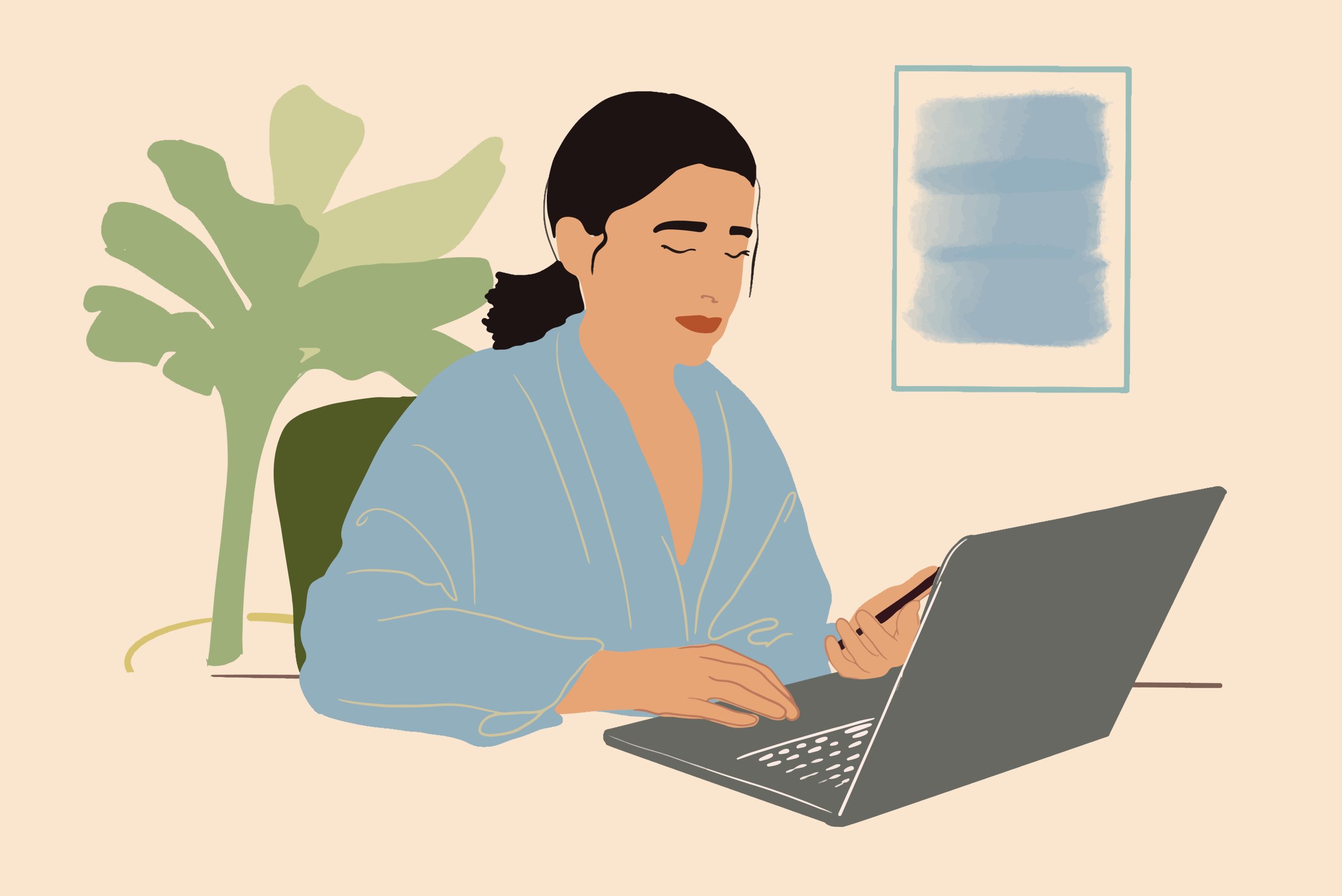
A drawing of a woman with olive skin and black hair sitting in front of a grey laptop. A green plant and blue painting are in the background.

My parents didn’t like that I, as the only Kerenza Ryan on social media, wanted to announce to the world that I am schizophrenic. Too big of a risk in my job hunt. I listened at first, changing my name on my profiles to avoid immediately showing up to employers.

But I’ve always wanted to be a writer, and I wasn’t going to stop publishing my pieces. I started in smaller magazines and eventually published a poetry collection called “I Am Schizophrenic.” Talk about obvious.

Jobs aren’t allowed to ask whether or not you are mentally ill. I do remember one, in particular, asking if my “writing” got in the way of my job. That was not a position I was hired for. Another employer  later cried about the way I deal with the physical health problems that come with my medication regimen (this while I worked in a doctor’s office, no less).

I was hospitalized twice; both times it affected my work. One boss mistakenly thought I went to rehab and I chose not to correct her—I wasn’t “out” yet. The second boss hadn’t yet read my work, but I told her anyway. She thanked me for sharing my secret. I explained it wasn’t a secret—many people knew. The fact that you could be schizophrenic and have it not be a secret shocked her.

Secret or not, sharing this information has been scary. There is at least one job I think I would have been more likely to get without having published my poetry collection. There is also at least one job I think I got because of the book.

Getting jobs has only been the beginning: I’m also affected once I have one. Sometimes, the boss wants to know what kind of “sick” you are. In that moment, you have to decide whether or not to say “The voices are particularly bad today.” 

 I don’t want to give the cookie-cutter response “If they don’t want all of me, they don’t deserve any of me,” but I will say this: I work hard. My schizophrenia has made me work hard. When I was so sick that I had the common delusion that nothing was real, including fast food nachos, I still worked at a restaurant where I bagged chip after chip.

As someone who has worked in mental health, I am aware not just personally, but also professionally, how hard it is for people with mental health disabilities to find a job. When the job search is combined with the homelessness, poverty, drug abuse, or simply an increase in medical appointments that goes with having a mental health disability, I watched person after person struggle.

But I have also seen many people get jobs. I’ve even worked at length to help people publish stories about their mental health disabilities. And I tell them it’s a great idea—because it is. For me, I’m not going to change my online presence for the voices in my head or the voices without.


Kerenza Ryan (she/her) is schizophrenic (and doesn’t mind labeling herself as such) as well as having celiac disease and PTSD. She is a kindergarten teacher and a ghostwriter; her work can be found on her website. When not writing or teaching, she enjoys reading, hiking, and lazing around with her girlfriend, something her girlfriend calls “potatoing.”

Rooted in Rights exists to amplify the perspectives of the disability community. Blog posts and storyteller videos that we publish and content we re-share on social media do not necessarily reflect the opinions or values of Rooted in Rights nor indicate an endorsement of a program or service by Rooted in Rights. We respect and aim to reflect the diversity of opinions and experiences of the disability community. Rooted in Rights seeks to highlight discussions, not direct them. Learn more about Rooted In Rights

Braille and Leisure in India: 10 Years of White Print Magazine

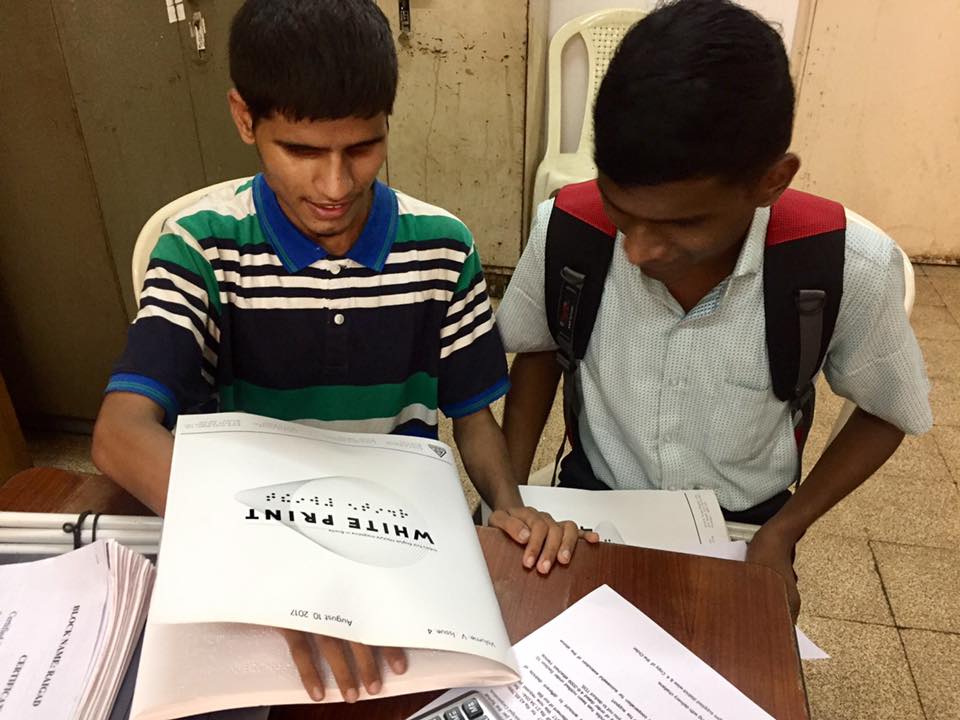
Indoors. Two dark brown-skinned Indian teens, one wearing a bookbag on their back, look down at copies of White Print mag that are located on a brown table.

India is home to more than 18 million blind people; most of us face stigma and discrimination on a day-to-day basis. Apart from inaccessibility and lack of awareness and funds, most blind people find it hard to get a good education or employment opportunities. 

Not many among India’s blind population have the means to buy laptops and smartphones; nor do many of us have access to technology like screen reading software and apps like Audible. While there have been some free audiobooks and textbooks in braille, there hasn’t been anything much in English braille that the blind could read for leisure

Upasana Makati, a former PR professional, loved reading the newspaper every morning. One day in 2012, she suddenly wondered what the blind in India read for leisure. After months of research and conversations with blind people, she realized that there wasn’t any Braille lifestyle magazine in English in India and decided to start one in 2013. The question she pondered was why shouldn’t the blind have access to leisure reading for fun like the sighted do. This was the beginning of White Print magazine, which celebrated 10 years of publishing in May of this year. 

“It feels surreal to have completed a decade. I started at the age of 23 and, during this ten-year-long journey, I have found people who have told me this will not work even for a couple of years. When I spoke to advertisers initially, many people told me it’s not going to work for you.  From that point to completing ten years now without being able to get any sort of massive investment and so, being bootstrapped, it feels phenomenal,” Makati says. 

Due to a lack of funding, she often wrote the content herself and printed the magazine at her own cost at the braille press of the National Association of the Blind, in Mumbai. Printing a Braille magazine is expensive, too. For White Print, the cost of printing has risen from Rs 0.50 ($0.006) per page to Rs 3.00 ($0.036) in the last few years. 

Although White Print had a few innovative brand collaborations in the past, post-pandemic advertising revenue has dwindled. However, Makati is determined to keep publishing the magazine because of the readers, some of whom have been reading White Print since its inception and look forward to it every month.

“Funding is still challenging and printing a Braille magazine is expensive and we’re charging only Rs 360 ($4.34) for twelve issues a year from our individual subscribers. Although some blind people have access to audiobooks, I feel blind people too should have the option to choose between reading a braille copy today and listening to an audiobook tomorrow. Just as sighted people have the option to choose between print, e-books, or audio,” she says.

For a long time, people with disabilities in India have been either seen as sources of inspiration or sympathized with. There is a lack of empathy and understanding. Makati still gets asked why she runs a braille magazine in this age of digital media. She feels this idea comes from a very ableist point of view and would then ask why the sighted still buy books or magazines! 

Dr. Divya Bijur is a physiotherapist from Mumbai; she’s been blind since birth. She has been subscribing to White Print for the last seven years and finds the magazine insightful. Bijur feels White Print has helped her keep her connection with Braille. “I love reading Braille and have studied in Braille since the age of six. White Print covers diverse topics: from music, travel, parenting, nutrition, food, and environment to serious issues facing the world, and I think the work is great because we get to read various reading styles. The quiz is also amazing,” she says.

Although White Print is a lifestyle magazine, Bijur feels it encompasses her life by giving her a peek into the happenings of the world. “Reading generally cheers me up, and I feel ecstatic when I’m reading braille. White Print has been a great companion and at times I feel like throwing off my earphones and just being in peace and reading without sound, and that’s where braille comes to my rescue,” she adds. 

Satish Nikam is a 75-year-old blind retired senior from the state of Maharashtra. He couldn’t study beyond ninth grade owing to trouble in arranging for scribes for his examinations and inaccessibility in general. However, he had always loved reading and learning new things. After working as a telephone operator at a sugar mill for many years, he retired in 2008. 

“I have been reading White Print since it started publishing in 2013. I receive a monthly pension of Rs 900 ($10.81) only and do odd jobs even at this age to sustain myself and my wife. I often couldn’t pay for other materials in braille because printing in braille is expensive. I subscribe to White Print magazine and requested Ms. Makati to let me pay the subscription in installments or consider a concessional rate. Knowing the situation, Ms. Makati hasn’t charged me anything for all these years. The magazine carries articles on a variety of topics and opens up the world for a blind person like me. Although my English is not very great, I have learned a lot from White Print. There are articles on gardening, travel and culture, and so much more. And it gives us, the readers, a different kind of energy and joy,” he says. 

White Print currently has a reader base of 10,000 blind people. Makati feels braille literacy is important for the blind even though many of them are increasingly learning the use of screen readers. “Sighted children are still taught with physical books and taught how to write in cursive or write using pencil and paper,” she adds.

Before the pandemic, Makati had collaborated with several brands to create interesting braille advertisements for the magazine. As advertising is mostly visual and depends a lot on color schemes, design, photography, and infographics, it was something completely new and creative for the brands to think of advertising in Braille. 

“Raymond was the first company that we collaborated with. In October 2013, we had Coca-Cola advertise with us. They inserted an audio ad in the magazine which played a jingle as the magazine was opened. This musical card-like ad was very exciting for the readers as well because they felt a brand had done something specifically for them,” Makati says. 

Sandesh Bhingarde is the founder of a Mumbai-based nonprofit organization called Team Vision Foundation. This voluntary organization works towards empowering visually impaired students in different ways and conducts blindness sensitization workshops. 

“We have been subscribing to White Print magazine for more than a year and a half now. I feel the braille magazine is important because while working with the visually impaired, we’ve found they are missing out on reading and writing. We encourage the students to read in braille because, in many instances, blind students don’t know the spellings of words because they absolutely miss out on reading,” Bhingarde says. 

While there are a few braille magazines in other Indian languages, there was a lack of Braille magazines in English. Students who use screen readers or use text-to-speech and autocorrect are improving their spelling by reading White Print, Bhingarde feels.

As White Print has entered its eleventh year of publication this year, Makati wants to spread the pleasure of leisure reading through braille literacy among a bigger number of blind Indians. 

Just as every sighted child begins their schooling with pen and paper, braille as a script does the same for the blind. If a blind person does not have access to leisure reading via braille literature, their education and growth remain incomplete. Although screen readers like JAWS or NVDA have made it possible for the visually impaired to read, write and access the internet, braille remains the first step towards literacy for the blind. White Print has been trying to bridge the huge gap in the availability and accessibility in braille literature in India for more than ten years; I feel this is an important step towards enriching the lives of the blind in India.


Arundhati Nath (she/her) is a visually impaired independent journalist, content writer, and children’s author from Guwahati, India. Her work has been published in The Guardian, BBC News, Al Jazeera, CSMonitor, and many others. She can be reached at natharundhati@gmail.com and her published work can be viewed on her website.

Rooted in Rights exists to amplify the perspectives of the disability community. Blog posts and storyteller videos that we publish and content we re-share on social media do not necessarily reflect the opinions or values of Rooted in Rights nor indicate an endorsement of a program or service by Rooted in Rights. We respect and aim to reflect the diversity of opinions and experiences of the disability community. Rooted in Rights seeks to highlight discussions, not direct them. Learn more about Rooted In Rights

Lewis Capaldi is Taking a Break. Why Can’t I?

Singer-songwriter-musician Lewis Capaldi, a white man in his 20s, wears a black jacket and pants and a white T-shirt as he stands in front of a microphone with an acoustic guitar wrapped around his neck, hanging across his chest. His eyes are closed and his lips are slightly parted as he sings into the mic.

On June 27th, 2023 Lewis Capaldi officially announced his hiatus from touring, citing “the impact of Tourette Syndrome” as part of his decision, one discussed in his award-winning documentary How I’m Feeling Now. He did not take this decision lightly, empathizing with fans about how disappointing it is to look forward to a tour that’s been postponed—and the costs associated with it.

There’s no doubt that Capaldi loves touring, his fans, and the ability to play music in front of thousands each night. As a fellow Touretter, I’m thrilled that there is both representation of Tourette’s and the need for rest from such an international star. But I most resonate with the final part of his Instagram statement, which apologizes for rest while simultaneously justifying it: “I’m so incredibly sorry to everyone who had planned to come to a show before the end of the year but I need to feel well to perform at the standard you all deserve.”

While I’ve hardly achieved the same elevated status as fellow Touretters like Capaldi, Billie Eilish, Howie Mandel, Steve Wallace, and others, I’ve achieved a lot in my life. I’ve been Key Club President, a foster for kittens, a published writer, musician, and so much more. This confuses people when I do desire rest.

There are days when I can indulge in spontaneous plans. On other days, I need to reschedule advanced ones. It’s all up to my body, which cannot be tamed on a whim. During times of stress it can flare up, waxing and waning as it pleases.

But you were fine yesterday; you’ve pushed through it before, I think, an echo of others’ sentiments when I cancel or postpone plans. It also shapes others’ decisions about whether or not to include me at all. Their explanation is usually, “I didn’t think you’d want to come” or “It would be too stressful for you.”

This leads to shame, guilt, and feeling excluded, just for being in an unruly body; requests to forgo my comfort and embrace pain for the sake of others’ needs are seen as the “right” thing to do. While there are many times wherein I believe in pushing through (if possible), like an important celebration or funeral, it can be stressful on the body if the brain decides it’s a “tic-ier” day. It often results in having to take muscle relaxers, sedatives, and pain relievers to get back to a manageable spot.

Yet I still feel the need to apologize.

Many with Tourette Syndrome are encouraged to push past these difficulties, which is why you don’t often see people disclose their Tourette’s. As a child, my neurologist focused on controlling and eliminating the tics he believed were temporary…and my fault. He blamed chocolate, video games, SpongeBob, anything but a disability. So the masking began—and worked—and continued throughout my childhood and teen years. I was an honor roll student, involved in many service clubs and honor societies. I hung out with friends, pushing through the discomfort for the most part and making up an elaborate excuse when I couldn’t.

I believed my tics were a personal failure…until my late diagnosis at 22, long after my tics “should” have left. I had to confront the fact that rest was not a privilege, yet the guilt of canceling or modifying plans remained.

Like many others in the world, doomscrolling TikTok is a favorite pastime. User Vermin and the Rats (with a green pixie cut I wish I could pull off) confronts me with truths: “Is it possible you tie your sense of self-worth to your productivity and your ability to help others, and that’s why you feel so guilty when you’re not able to be productive and you have to rest? That you’ve been masking your disabilities for so long, that you genuinely don’t know how to gauge what your needs are?”

It’s Just Nerves: Notes on a Disability by Kelly Davio is an essay collection chronicling the author’s experience as a disabled person in the 21st century. She writes, “If you are going to disclose your illness, our culture tells us, you had better do it in a way as to make other people feel gratitude for their own good health, to take advantage of their robust bodies….” My addition? If you disclose your illness, you better be a superhuman of sorts. A gold-winning athlete. A wildly successful musical artist. Even then, you’ll still need to apologize for the need to rest. After all, your exceptionalism is waning, which is unacceptable.

In many programs across the United States, services for disabled students are referred to as ”Exceptional Education.” If you happen to be “gifted” AND disabled, you’re labeled as “Twice Exceptional.” Disability, as mainstream culture understands it, cannot inherently be associated with anything good at all; it must be paired with something to “make” it okay. In this case, being exceptional is the only acceptable way to exist in a disabled body. Don’t believe me? Just look at inspiration porn, or the objectification of disabled people to make able-bodied people feel better about their own lives.

When people respond to me with “That’s okay” or “You’re still such a capable woman” after explaining how my Tourette’s works, I get frustrated. Of course it’s okay. I never said anything about my capabilities. I never apologized for my existence.

It’s hard to correct them outright. I’ve even had to correct myself when I’ve thought or said something similar to people with other disabilities. It’s hardwired into so many brains that disability cannot coincide with anything neutral or good, even if you’ve lived it. The only way out of it is to rest boldly. After all, one of the primary tenets of disability justice is rest. No maybes, buts, ifs, or sorries. Just rest.

To practice, I’ve been typing out and removing apologies from my requests to postpone or skip events. I often still leave them out of fear or guilt, but I’m slowly improving my self-advocacy, simply taking the rest I’m allowed to take. I can no longer feel the need to “make up” for the way I exist “proving” exceptionality.


Gretchen Gales (she/her) writes…a lot. After realizing becoming a veterinarian meant being good at math, she pursued writing and teaching as a career instead. You can find more of her written and artsy stuff at www.writinggales.com.

Rooted in Rights exists to amplify the perspectives of the disability community. Blog posts and storyteller videos that we publish and content we re-share on social media do not necessarily reflect the opinions or values of Rooted in Rights nor indicate an endorsement of a program or service by Rooted in Rights. We respect and aim to reflect the diversity of opinions and experiences of the disability community. Rooted in Rights seeks to highlight discussions, not direct them. Learn more about Rooted In Rights

Monsters in the Closet: Facing Fears of Inaccessibility

Black and white illustration of a young child with long dark hair in a dress covering up their face as the mouth of a VERY large generic monster with sharp teeth tries to eat them.

The portrayal of disability in horror films is often very problematic—think of mental illnesses such as Dissociative Identity Disorder (DID) in the 2016 movie “Split.” Yet, horror movies hold a special allure to me. This could be because my mother has always been opposed to horror, gore, and movie violence in any form—except for distinct comedic effect. However, I think horror movies can hold a certain allure for disabled viewers due to their relatability. Being disabled can be incredibly anxiety-inducing. I find myself constantly in a state of what-if when dealing with aspects of my disability in an inaccessible world:

“What if TSA confiscates my medication? What if the environment there drives me to sensory overload and there’s no way to leave? What if I don’t “look” disabled enough to receive the accommodations I asked for?”

Horror movies often portray disabled people as the horror, but the true horror is the inaccessible world. I remember I hated tag, the default game of every elementary schooler, because I was always caught first. Years later, when watching horror movies I remembered the fear of being the farthest behind like the characters being picked off first by the monster.

In a haunted house horror, the family is tormented by fears and horrors while inside the house; outside of it, their anxiety over what lies inside tends to devour their lives. As long as the environment around us remains inaccessible, people with disabilities are constantly stuck inside the haunted house. Assuming that our home environments are accessible to us, that consolation can be our one reprieve. However, not everyone is that lucky.

Recently, one of my what-if scenarios happened. Since the beginning of the pandemic, I’ve done everything I can to prevent getting COVID-19. I have asthma and a history of lung disease. For many disabled people with similar concerns, the COVID-19 pandemic elicits a seemingly never-ending fear: what if I get COVID? Although vaccinations and new antiviral medications tampered these fears, the reality of a positive COVID test was still a shock.

By December of 2022, I’d made it through almost two full years of negative results. Each time my reactive airway and lungs flared up at an everyday cold, I’d take a test only to be negative. At this point, I did not expect to test positive, yet that second pink line appeared thick and clear. It was undeniable. Although I coughed and wheezed and my chest tightened, ultimately I didn’t need to be hospitalized. This was a feat I owe to vaccinations and modern medicine.

The real horror movie began after COVID, when suddenly my asthma was significantly worse. My pulse oximeter showed my oxygen levels dropping regularly to low 90s, a never-ending cough developed, and I was overtaken by a level of fatigue that I’d never experienced before.

Again, the horror for me was not my symptoms but the inaccessibility I encountered in everyday situations. The steep stairs to my apartment became the equivalent of a long, dark hallway from a suspenseful horror film. I started using a cane to combat the fatigue so that I could make it through my work day. My slow pace and inability to run created an even tighter time crunch, worsened by my ADHD. Everyday household tasks, such as laundry, became impossible as I no longer had the energy or strength to haul it to the laundromat without bending into a coughing fit or asthma attack.

Eventually, I was prescribed cough medicine and a new inhaler that managed to restore my asthma to a controlled state after a few more weeks. However, my asthma did not disappear and COVID-19 lingers.

A coping method I’ve been taught for anxiety  is to play out a worse-case scenario. This way you see that even the worst situation your anxiety can throw at you is not world-ending. One therapist explained it to me as “…seeing monsters in the closet makes them less scary. It’s the idea of the unknown that is the most terrifying.” I played out my COVID-19 scenario in real time and, despite the real struggles I faced dealing with the aftermath of the virus, I found ways to accommodate myself, even when facing inaccessibility.

Horror movies push monsters out of the closet. Most horror movies, especially the haunted-house subgenre, end in a tense resolution of the protagonists leaving the haunted area, often with the monster lingering in the background. In “The Shining,” the mother and son manage to get away unharmed, but Jack is left at the hotel, mad and murderous. The threat of fear lingers on, just as the threat of inaccessibility never fully dissipates.

People can develop a disability at any point in their life, even people who already label themselves disabled have fluctuating support needs. These are all themes that linger in the back of horror, often cloaked in offensive stereotypes. I often wonder what horror stories and movies written by disabled people could look like. How would we portray the everyday horrors of inaccessibility? Inspiration porn pities us and stereotypical horror films label us monsters.

However, we are just as human as any nondisabled characters, with flaws and triumphs that make us neither distinctly hero nor villain. Let’s take possession of the real monsters—the world’s accessibility barriers—and bring them out into the harsh daylight alongside the ghosts and demons on television.


Fifer Charlie Loftus (they/he), who goes by Charlie, is a queer disabled writer who lives in New York. He works in a library and enjoys reading, writing, and playing board games in his free time.

Rooted in Rights exists to amplify the perspectives of the disability community. Blog posts and storyteller videos that we publish and content we re-share on social media do not necessarily reflect the opinions or values of Rooted in Rights nor indicate an endorsement of a program or service by Rooted in Rights. We respect and aim to reflect the diversity of opinions and experiences of the disability community. Rooted in Rights seeks to highlight discussions, not direct them. Learn more about Rooted In Rights